Summer White Cotton Cutwork is not just a fabric, it’s poetry in thread. There is something timeless about white cotton in summer. It breathes with the body. It softens under the sun. And carries memory without demanding attention. Across continents, artisans have returned to one idea repeatedly — cutting, piercing, embroidering, and sculpting white fabric into something light enough for heat, yet rich enough for ceremony.
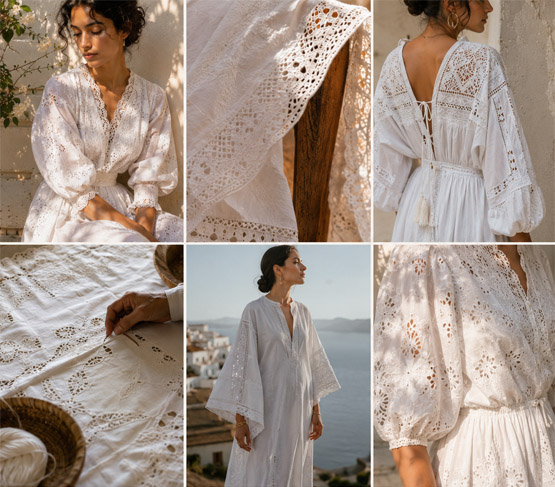
From the narrow lanes of Lucknow to the villages of Madeira, from English broderie anglaise to Italian Sangallo lace, cultures separated by oceans arrived at remarkably similar textile languages. The stitches changed slightly. The motifs shifted with geography. But the emotion remained constant: summer dressing as delicacy.
Today, global fashion houses are once again revisiting these traditions. Their runways are filled with airy whites, handcrafted perforations, floral shadows, and cotton embroidery that feels rooted in history rather than trend.
Few textile traditions capture poetic restraint like Muzaffar Ali’s revival of Lucknow’s chikankari. The craft traces its origins to the Mughal courts, where fine white embroidery on muslin became synonymous with refinement and summer elegance.
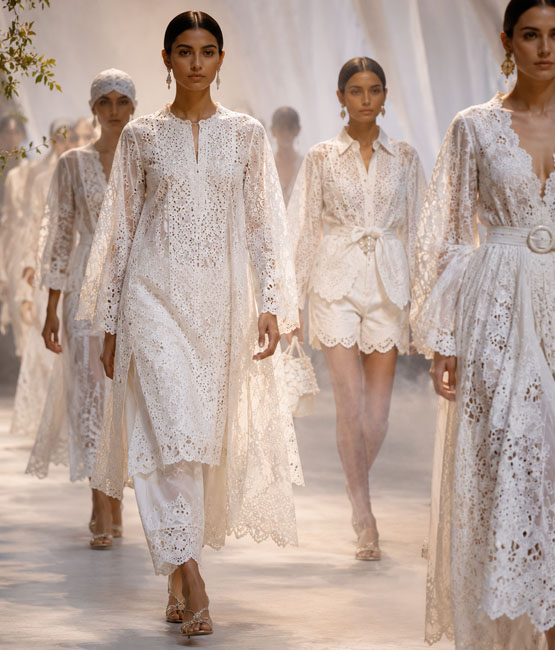
Traditionally worked with white thread on white cotton, chikankari relies on shadow work, jaali patterns, floral vines, and hand-cut textures that create movement through light rather than colour. The craft is labour-intensive yet visually weightless.
Contemporary Indian designers continue the conversation. Houses like Abu Jani Sandeep Khosla, Payal Jain and Rahul Mishra have interpreted white embroidery through couture silhouettes, while younger labels are bringing chikankari into resortwear and modern tailoring.
Ali’s label, Kotwara, helped reposition chikankari beyond heritage costume. His presentations treated the fabric like poetry in motion — layered angrakhas, flowing kurtas, and soft dupattas that honoured craft without making it feel archival.
In Victorian England, another whitework tradition emerged with striking similarities.
Broderie anglaise — literally “English embroidery” — combined embroidery with deliberate cutwork. Tiny holes were cut into cotton and reinforced with buttonhole stitches to create floral and lace-like patterns.
The technique flourished during the nineteenth century when lightweight cotton became widely accessible. Summer dresses, petticoats, collars, and children’s garments frequently featured the fabric. The look carried innocence and refinement, but also practicality for warm weather.
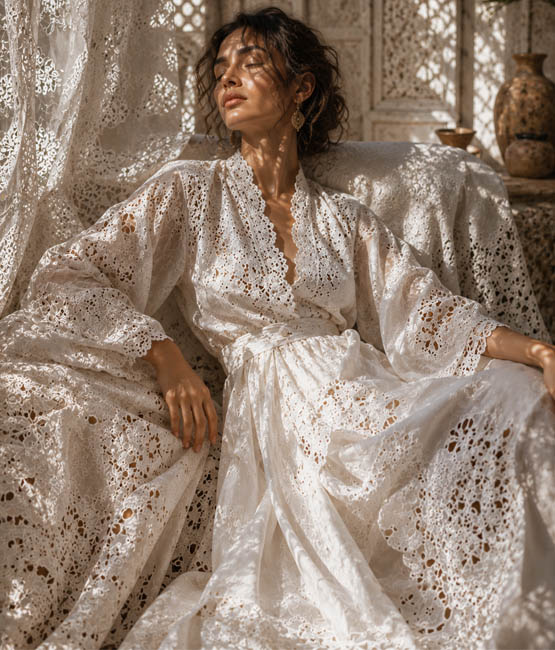
Today, broderie anglaise has returned strongly to luxury resortwear and contemporary bohemian fashion. Dior incorporated embroidered cotton lace and delicate white textures into its recent Spring-Summer collections under Jonathan Anderson.
Design houses such as Zimmermann have also embraced romantic white cottons with lace inserts, cutwork dresses, and airy silhouettes that echo antique European embroidery traditions.
On the Portuguese island of Madeira, white embroidery evolved into an export industry during the nineteenth century. Madeira embroidery often featured padded satin stitches, floral sprays, scalloped edges, and pierced cutwork on linen and cotton.
Unlike English broderie anglaise, Madeira embroidery carried stronger botanical detailing and denser ornamentation. Yet visually, the fabrics still belonged to the same family of summer whites.
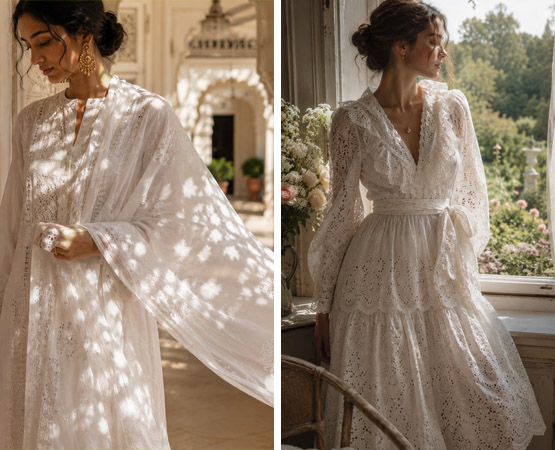
European aristocracy embraced Madeira linens for warm climates and tropical travel. Tablecloths, dresses, parasols, and handkerchiefs became symbols of leisurely sophistication.
Even today, many luxury resort collections borrow from Madeira’s vocabulary without directly naming it — especially through scalloped hems, floral eyelets, and monochromatic cotton embroidery.
Italian cutwork traditions, particularly Richelieu embroidery, pushed the technique toward architectural complexity. Instead of soft floral punctures, Italian artisans created larger cut-out sections connected through embroidered bars and bridges.
The result felt more sculptural. Shadows became part of the garment itself.
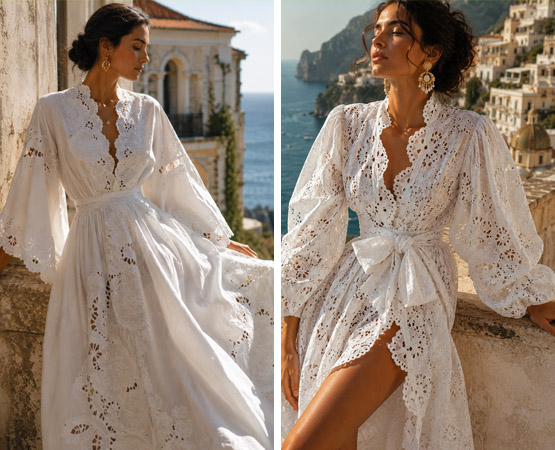
Italian summer fashion continues to reinterpret these techniques through linen dresses, cathedral-inspired lacework, and artisanal white separates. The Mediterranean approach often feels sharper and more sensual compared to the softness of English or Indian whitework.
In Italy, Sangallo lace developed as one of the most recognisable forms of cutwork embroidery. Named after the town of San Gallo, the technique became associated with floral perforations, scalloped edges, circular eyelets, and richly embroidered cotton fabrics.
Sangallo often feels bolder than English broderie anglaise. The cutwork is larger. The motifs are more expressive. The silhouettes carry Mediterranean ease and sensuality.
The fabric became closely tied to Italian summer dressing — white cotton dresses, coastal blouses, flowing skirts, and heirloom linens designed for heat and movement.
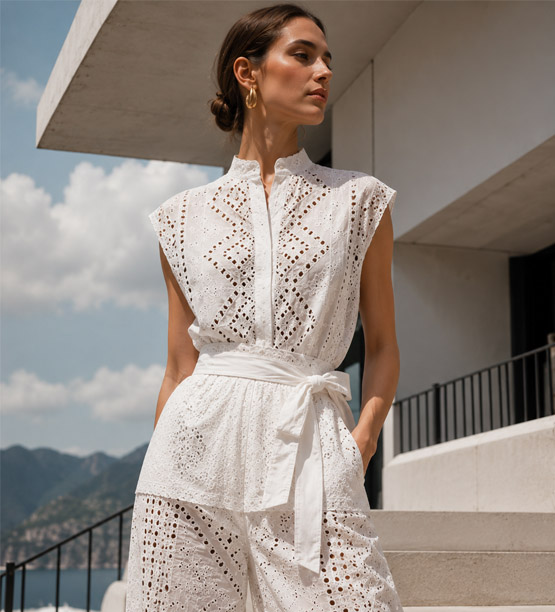
Modern Italian fashion continues to reinterpret Sangallo through resort collections and luxury ready-to-wear. Labels such as Dolce & Gabbana frequently revisit white lace, eyelet cottons, and southern Italian embroidery traditions in their summer presentations.
Even today, Sangallo remains one of fashion’s clearest reminders that ornamentation can still feel breathable, effortless, and deeply connected to climate.
Switzerland transformed white embroidery into technical mastery through Schiffli embroidery. Developed during the nineteenth century in St. Gallen, the technique used specialised embroidery machines capable of recreating intricate hand-embroidered patterns on cotton and linen.
Swiss eyelet fabrics became known for their precision — tiny perforations framed with embroidery, geometric floral repeats, and crisp detailing that worked beautifully in summer garments.
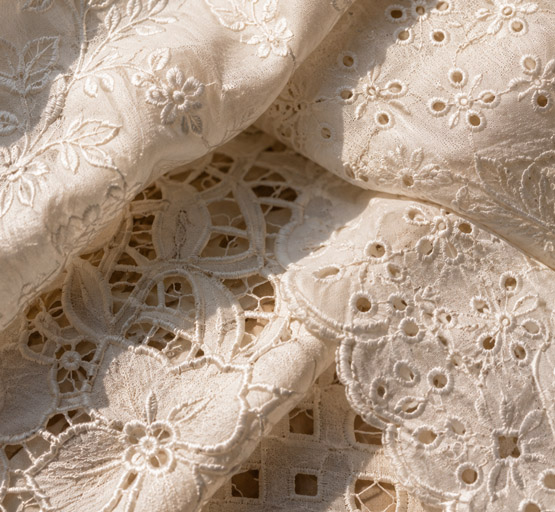
Unlike softer handmade traditions, Schiffli introduced consistency and scalability without losing delicacy. The fabric quickly became popular across Europe for warm-weather dressing, children’s wear, lingerie, and resort clothing.
Today, luxury houses continue to revisit Swiss eyelet in contemporary forms. Recent collections from Valentino and Chloé featured airy white dresses, embroidered cotton coordinates, and lace-inspired summer silhouettes that echoed classic Swiss embroidery traditions.
What makes Schiffli important is its balance between craftsmanship and technology. It marked the moment whitework embroidery entered modern fashion production while still preserving its romantic visual language.
What makes these traditions fascinating is not their difference, but their resemblance. These embroidery traditions emerged in regions shaped by heat and humidity. And they relied on breathable cottons and linens, soft white threads, delicate perforations, and airy textures that allowed movement and comfort. Across cultures, whitework embroidery became a refined expression of elegance without excess.
These textiles prove that craftsmanship often evolves through climate, touch, and necessity rather than direct influence alone.
Enjoyed reading about Summer White Cotton Cutwork? Do let us know your thoughts.