The most astonishing rock formations in the world are not just landscapes—they are encounters with deep time. Shaped by wind, water, and fire over millions of years, they reveal forms no human hand could ever imagine. The first time you stand before a truly monumental rock formation, scale stops making sense.
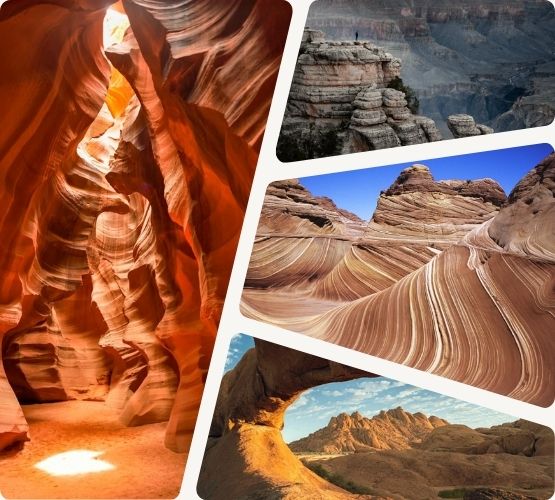
Cliffs ripple like fabric, stone rises in impossible silhouettes, and colours shift with the light as if the earth itself were breathing. From desert waves and marble canyons to mist-wrapped pinnacles and vast chasms, this is a journey across the planet’s most astonishing rock formations—places that feel less like destinations and more like stepping into another world.
“Before design, before architecture—there was stone, sculpted by time itself. Where stone flows like fabric and light becomes the final embellishment.”
Location: Arizona, USA
How to reach: Fly into Las Vegas or Phoenix → 4–5 hour drive
Best way to experience: South Rim viewpoints, helicopter tours, Colorado River rafting
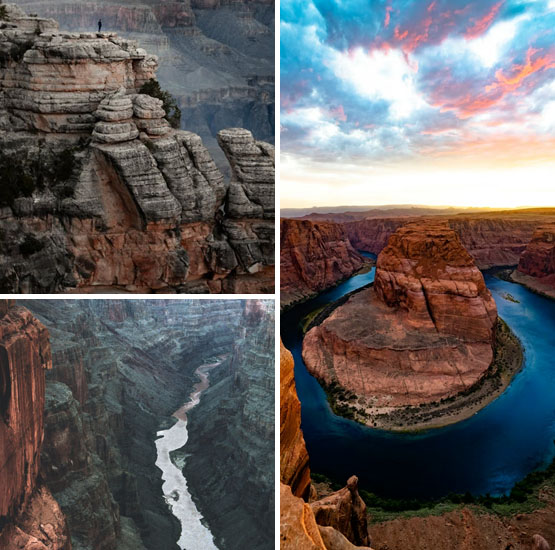
What makes it special:
A 277-mile-long canyon carved by the Colorado River, exposing nearly 2 billion years of Earth’s history in visible rock layers. From towering cliffs to winding river bends, its ever-changing colors and textures transform with the sun, offering a different spectacle at every hour.
Things to keep in mind
On screen: Into the Wild featured its dramatic terrain
Classic survival thriller Savage Water was filmed on the Colorado River
Location: Page, Arizona (Navajo Nation)
How to reach: 10-minute drive from Page; nearest airport is Page Municipal
What makes it special:
A slot canyon carved by flash floods, with smooth, wave-like sandstone walls that resemble draped fabric. Situated near Page, Arizona, and accessible only via guided tours, its narrow passages—often just a few feet wide—rise up to 100 feet. Its narrow, sinuous corridors—sculpted in deep orange and amber hues—allow shafts of light to pierce through, creating surreal, ever-changing patterns across the rock.
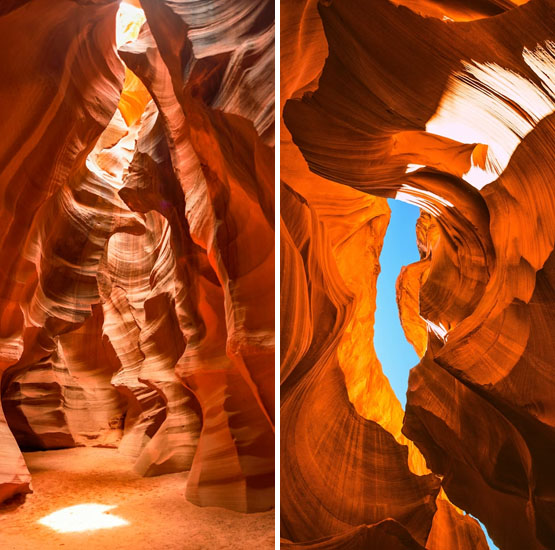
Things to keep in mind
On screen: Featured prominently in The Canyon
Location: Hunan Province, China
How to reach: Fly to Zhangjiajie Hehua Airport, then a 40–50 minute drive to Zhangjiajie National Forest Park. High-speed trains also connect Zhangjiajie with major cities like Changsha and Beijing.
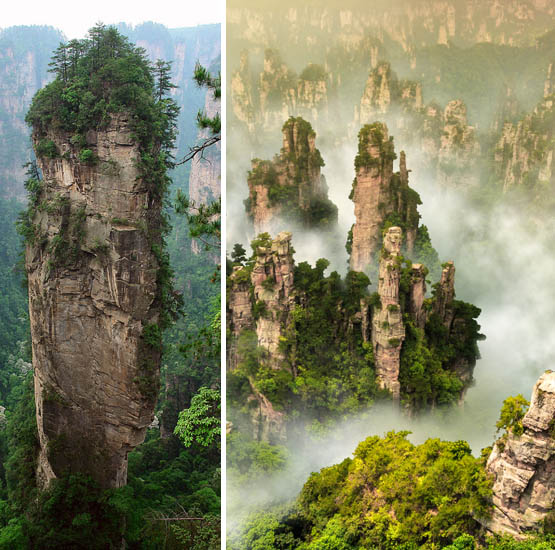
What makes it special:
Thousands of vertical sandstone pillars rising like natural skyscrapers. Spread across over 4,800 hectares, many of these quartz-sandstone columns soar more than 200 meters high, shaped by erosion and subtropical weathering over millions of years. This UNESCO-listed landscape featuring over 3,000 towering pillars often shrouded in mist, creates a surreal, floating effect across the forested valleys below.
Things to keep in mind
On screen: Inspired the floating mountains in Avatar
Location: Central Turkey
How to reach: Fly to Kayseri or Nevşehir → 1-hour drive
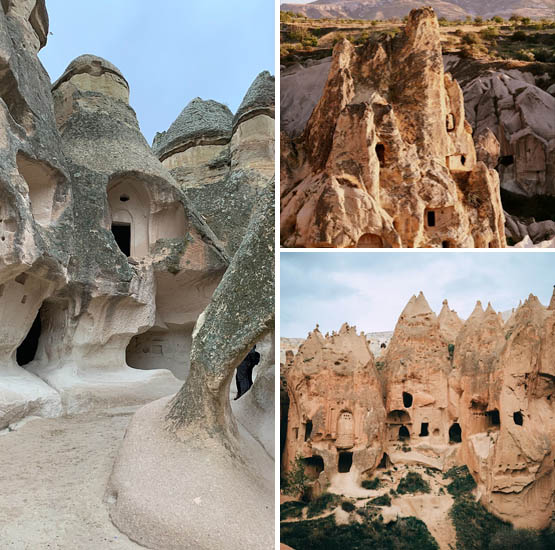
What makes it special:
Part of the UNESCO-listed Göreme National Park and the Rock Sites of Cappadocia, this landscape was formed from layers of volcanic ash and lava that solidified into soft tuff rock over millions of years. Gradual erosion by wind and water sculpted these deposits into the region’s iconic “fairy chimneys”—tall, conical formations, many rising several meters high. Over centuries, these rocks were carved into cave homes, churches, and vast underground cities, creating a rare intersection of geology and human habitation.
Things to keep in mind
On screen: Ghost Rider: Spirit of Vengeance used its dramatic terrain
Location: Jabalpur, Madhya Pradesh
How to reach: Fly/train to Jabalpur → 30-minute drive
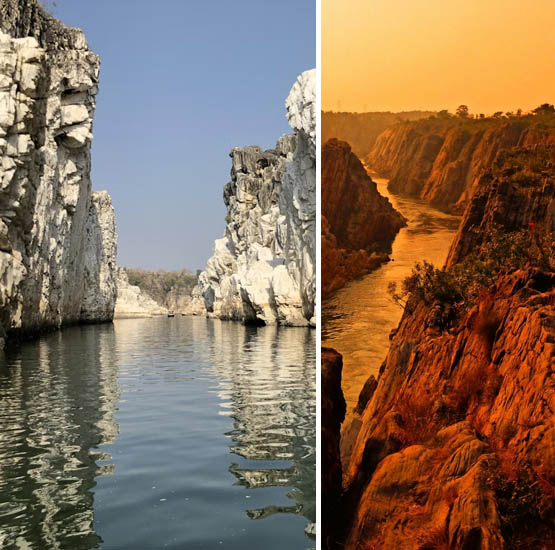
What makes it special:
White marble cliffs carved by the Narmada River form a narrow gorge where the rock faces rise up to 100 feet on either side. The marble reflects sunlight by day and glows under moonlight, creating a rare interplay of light, water, and stone. Best experienced by boat, the narrow passage reveals constantly changing textures and light across the stone. Unlike rugged sandstone landscapes, its polished texture and reflective quality give it an almost sculptural finish.
Things to keep in mind
On screen: Featured in multiple Indian films, notably Asoka
Location: Western Madagascar
How to reach: Fly to Morondava, then a full-day (8–10 hours) off-road journey by 4×4 to Tsingy de Bemaraha National Park, often involving river crossings and rough terrain.
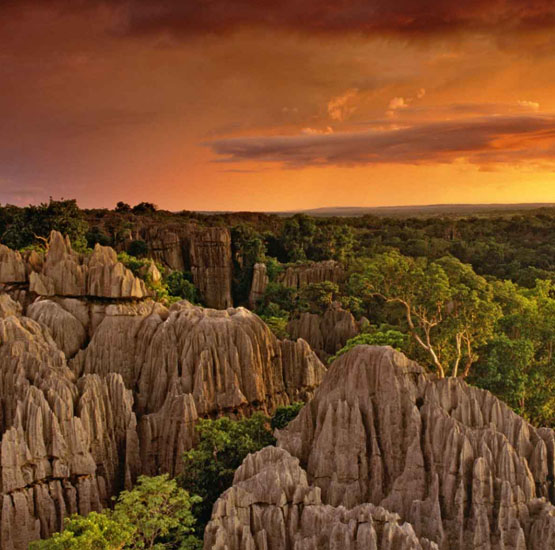
What makes it special:
A dramatic limestone “stone forest” formed over millions of years, where razor-sharp pinnacles—some rising over 70 meters—create a dense, labyrinthine landscape. Accessible via rope bridges and narrow pathways, it offers an intense, immersive experience through one of the most visually striking and physically engaging terrains on Earth
Things to keep in mind
On screen: Inspired animated landscapes in Madagascar (indirect visual inspiration)
Location: Coyote Buttes North, on the Arizona–Utah border, USA
How to reach: Nearest town: Kanab, Utah. Fly into Las Vegas → ~4.5-hour drive
Final stretch requires off-road driving + a 5–6 km hike
What makes it special: A swirling sandstone formation within the Coyote Buttes North area of the Paria Canyon–Vermilion Cliffs Wilderness (spanning over 112,000 acres), it has, over millions of years, been shaped by wind erosion into flowing bands of red, orange, and gold.
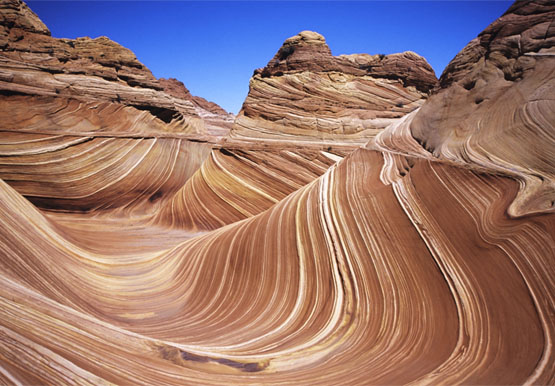
More importantly, its accessible only by permit and its a remote desert hike. The site offers an intimate, high-reward encounter with one of the most visually striking and exclusive landscapes in the world. Its patterns resemble liquid movement frozen in stone, making it one of the most photographed geological sites in the world.
Things to keep in mind
This is not a casual visit—it’s a serious, high-reward travel experience.
On screen / cultural presence: While not heavily used for mainstream film shoots due to its protected status, The Wave has become a visual icon in global photography, travel campaigns, and fashion editorials—often doubling as a “Mars-like” landscape in conceptual shoots.
Location: Damaraland region, Namibia
How to reach: Fly into Windhoek ~3–4 hour drive (self-drive or guided safari route)
What makes it special: Often called the “Matterhorn of Namibia,” Spitzkoppe is actually a group of ancient granite peaks rising dramatically from flat desert plains. Formed over 120 million years ago, these rocks are remnants of volcanic activity, later exposed by erosion—creating smooth, sculptural surfaces and dramatic vertical rises.
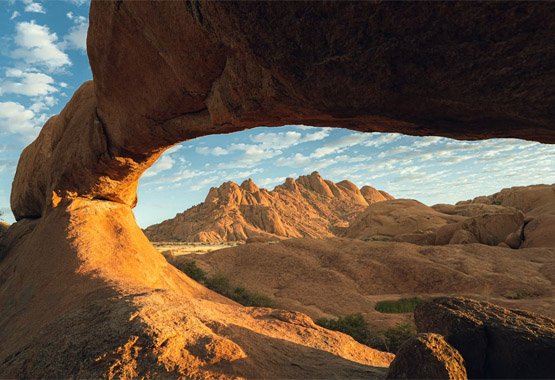
The most iconic feature? A natural rock arch that perfectly frames the desert beyond—arguably one of Africa’s most photogenic geological compositions.
Things to keep in mind
Location: Isle of Skye, Scotland
How to reach: Fly to Inverness or Glasgow → 3–5 hour drive, Cross via Skye Bridge
What makes it special: A dramatic landslip created these towering rock pinnacles, the most famous being the “Old Man”—a jacreatere rising sharply against the sky. The geology here is part of the Trotternish Ridge, which is shaped by ancient volcanic activity. Hence, subsequent landslides creating a landscape that feels alive and shifting.
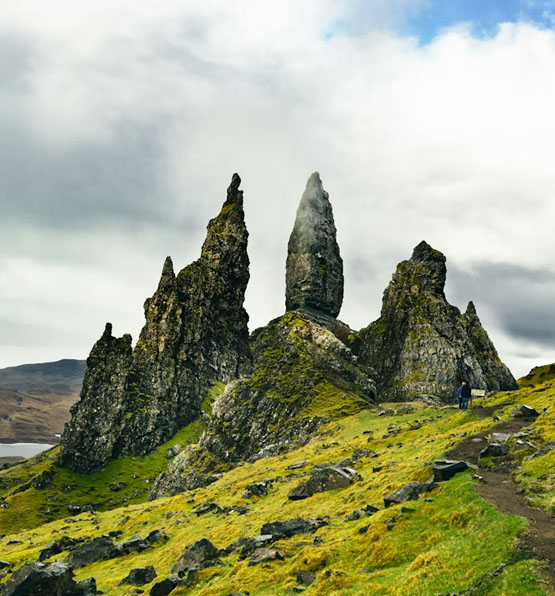
Why it stands out visually: Vertical, sculptural rock forms (like Zhangjiajie National Forest Park but more rugged and moody). Constantly changing atmosphere—fog, rain, light beams. A palette of greys, greens, and deep shadows instead of desert tones
Things to keep in mind
On screen: Featured in Prometheus, Appears in The BFG. Its haunting landscape often doubles as alien or prehistoric terrain in cinema.