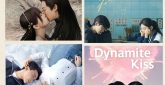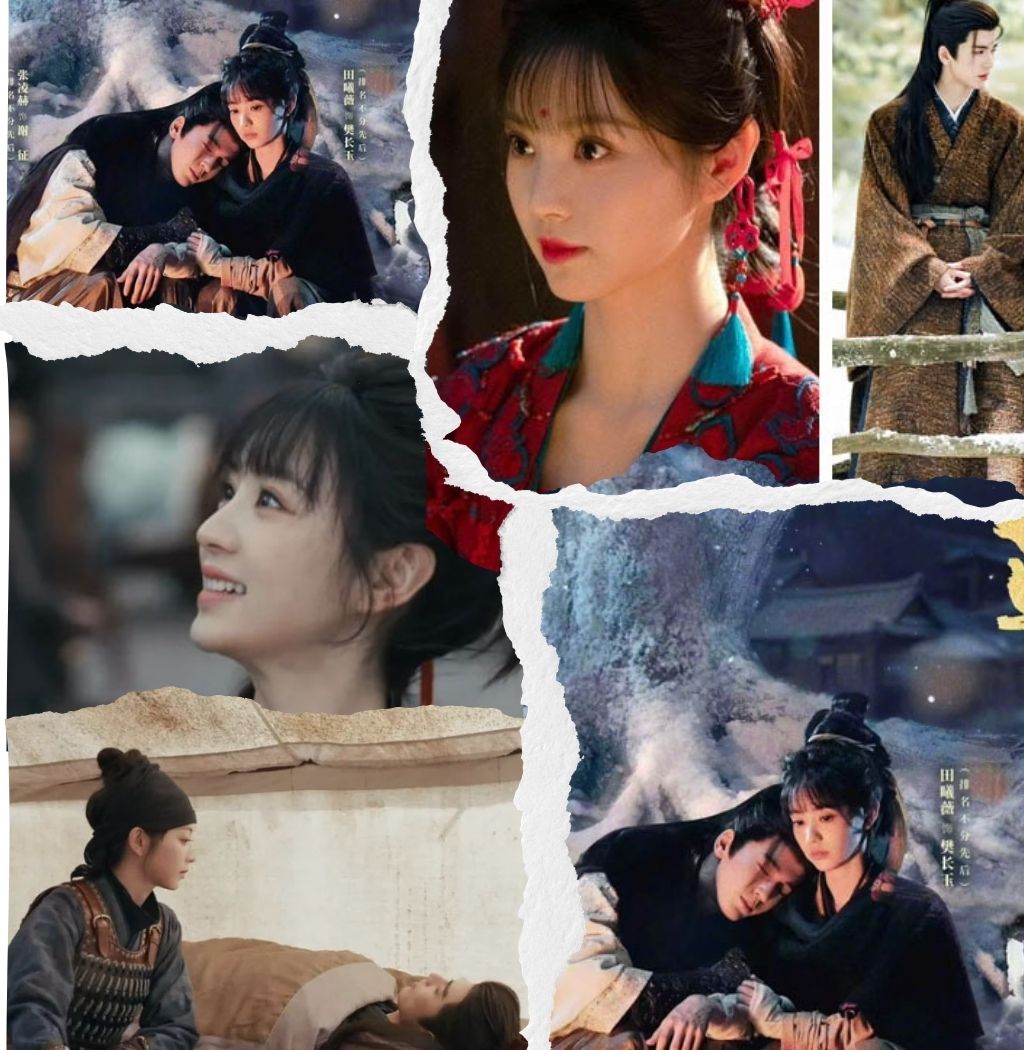
In a genre often draped in fragility, the latest C-Drama, Pursuit of Jade arrives with a different texture—one that feels lived-in rather than lacquered. This is not a world built only on longing glances and ornamental beauty; it is one where hands are calloused, choices are transactional, and love, when it comes, is neither pure nor easy. What begins as a familiar trope—a fake marriage between a butcher girl and a fallen nobleman—quickly reveals itself as something deeper: a story where survival comes first, and emotion follows cautiously behind.
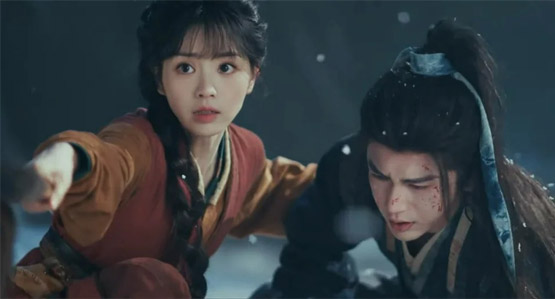
At the centre of this world is Fan Changyu, a heroine who resists being moulded into delicacy. With a compelling screen presence, she is defined not by grace, but by labour. And her strength is visible in almost every frame. At the same time one can’t help but admire her resilience.
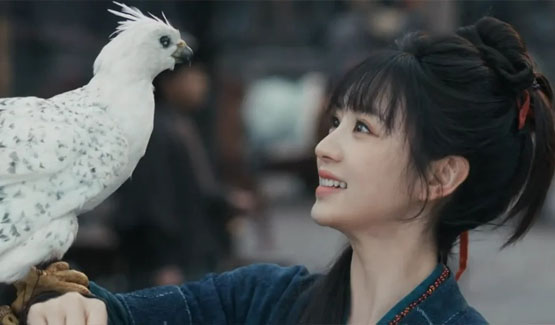
There is a physical honesty to her that disrupts the polished femininity often expected of historical drama leads. And, Opposite her stands Xie Zheng, played by Zhang Linghe, a man of restraint, carrying the quiet burden of identity, loss, and vengeance beneath a composed exterior. Their dynamic is not immediate or indulgent; it is built gradually, through observation, friction, and a reluctant kind of trust.
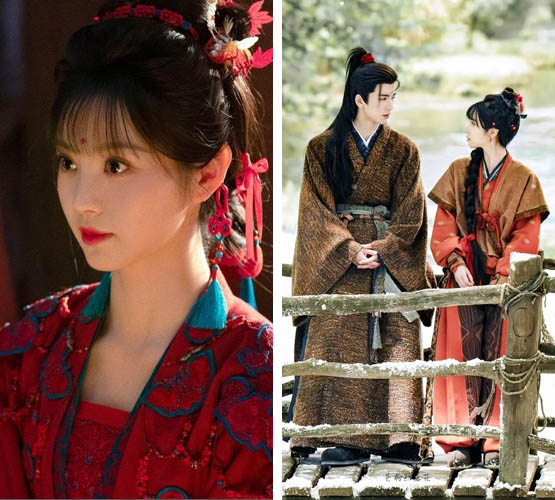
Costume, in Pursuit of Jade, is not an accessory—it is narrative. Changyu’s early world is rendered in coarse fabrics, practical drapes, and muted tones that speak of function over form. As her circumstances shift, so too does her visual identity.
Silhouettes begin to soften, textiles gain fluidity, and yet, her styling never fully abandons its grounded origins. In contrast, the aristocratic sphere is articulated through layered silks, intricate weaves, and deliberate excess, where every fold signals hierarchy. Fabric, here, does not decorate—it declares. It maps movement between classes, and mirrors the emotional evolution unfolding beneath the surface.
In this world, love refuses simplicity. It exists across a spectrum—transactional, restrained, performative, and at times, quietly transformative. For Changyu, love begins as survival: something to be approached with caution, negotiated rather than surrendered to. For Xie Zheng, it is restraint—felt deeply, but filtered through duty and the weight of what he stands to lose. Around them, love takes on more fractured forms. Within systems of power, it becomes control, leveraged and manipulated. Elsewhere, it is performance—enacted to meet societal expectations rather than emotional truth.
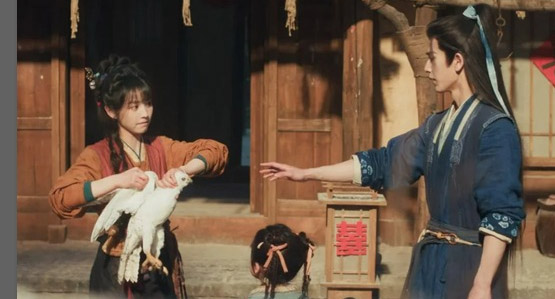
“Love Exists — Evil and Benevolent”
Then there is Qi Min, played with unsettling intensity by Deng Kai, whose love refuses to sit quietly within any moral boundary. His obsession with Yu Qian Qian, portrayed by Kong Xueer, is hard to miss—because it is neither gentle nor safe. It consumes, it controls, and yet, it evolves. By the end, Qi Min is no longer governed by the rigid beliefs he once held; love bends him. Not into neat redemption, but into something undeniably altered. In Pursuit of Jade , even obsession is allowed evolution.
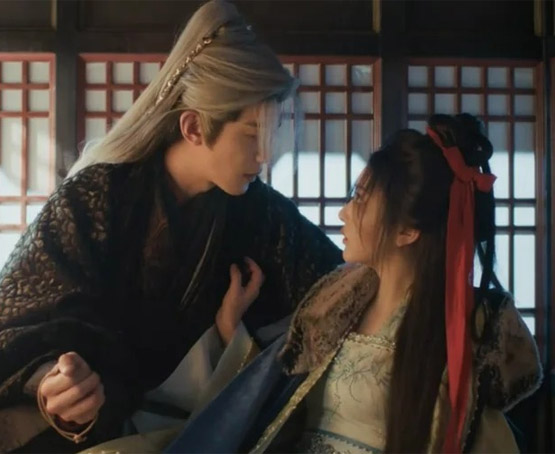
What emerges between Changyu and Xie Zheng, however, is something rarer—a love that transforms. What begins as a necessity becomes the one thing neither of them planned for. In this series, love is not a feeling alone; it is a negotiation, a risk, and occasionally, a quiet miracle.
As the narrative expands, so does its emotional terrain. War enters not as spectacle, but as disruption. The series resists glorifying conflict; instead, it lingers on what remains after—the silence, the separation, the erosion of certainty. Relationships are tested not in moments of action, but in absence. The rhythm of intimacy shifts, shaped by distance and the psychological weight of survival. Pursuit of Jade is less concerned with how wars are fought, and more with how they are endured.
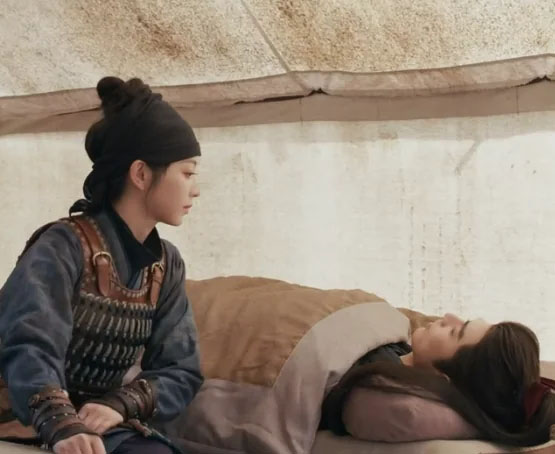
This measured approach extends to the series’ pacing. Early episodes unfold with a deceptive lightness, drawing viewers in with moments of humour and domestic familiarity. But as the story deepens, so too does its emotional intensity, layering political stakes without losing sight of its characters. The chemistry between the leads is not declared—it is revealed, in pauses, in hesitations, in the spaces between words.
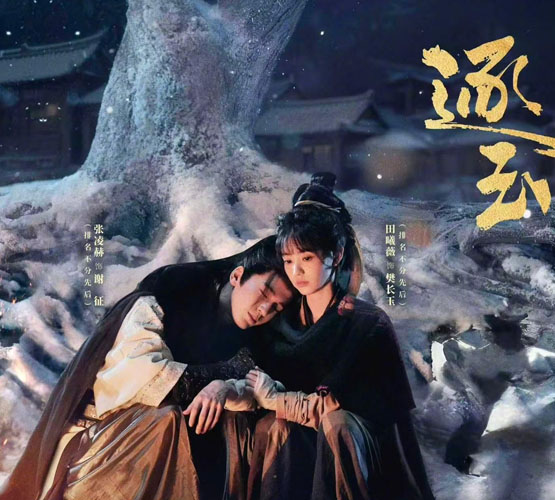
Pursuit of Jade ultimately resists the ease of conventional romance. It understands that beauty can coexist with brutality, that softness can emerge from strength, and that love, in all its contradictions, is most powerful when it is hardest won.
It may be dressed in silk—but its soul is built on survival.